


Closing the Loop: Employee Education Protocols for Correct Sorting and Disposal of Kraft, Aluminum, and Corn Starch
Employee Education for Correct Multi-Material Sorting in B2B Foodservice

The success of any sustainable packaging program relies entirely on proper sorting at the point of disposal. For B2B foodservice and retail clients, employee education is the most critical and often overlooked step. Contamination caused by confusing Kraft, Aluminum, and Corn Starch (CPLA) can lead to the rejection of entire waste streams, incurring high contamination fines and undermining sustainability goals.
1. The Sorting Confusion Points
Employees must be taught to differentiate three fundamentally different waste streams:
Confusion 1: CPLA vs. Plastic: Employees often mistake CPLA cutlery for conventional plastic (RIC #5 or #6) and place it in the recycling bin. Result: Contamination of the plastic stream.
Confusion 2: Kraft Liner vs. Paper: Employees mistakenly place bio-lined Kraft containers into the paper recycling bin when the liner is compostable. Result: Contamination of the paper recycling stream (as the lining can't be processed by the paper mill).
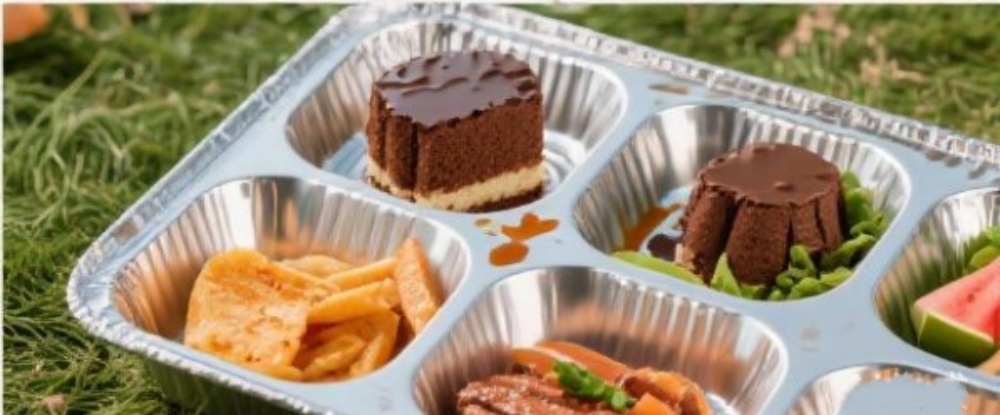
Confusion 3: Food Residue: Placing any of the three materials with significant food residue into their designated bin (especially aluminum or paper) can cause the entire batch to be rejected.
2. The Three-Bin System and Education Protocol
We recommend a mandatory "Three-Bin System" and a visual training protocol for all client staff.
Bin 1: ORGANICS / COMPOST ONLY: Designated for Corn Starch (PLA/CPLA) cutlery and Bio-Lined Kraft Containers (if industrial composting is available).
Bin 2: METAL RECYCLING ONLY: Designated for Clean Aluminum Foil Containers (AFCs).
Bin 3: TRASH / LANDFILL: Designated for any material that cannot be cleaned (e.g., heavily soiled Kraft) or if composting/recycling is unavailable.
3. Visual Training Tools
Training must rely on visual aids, not complex scientific explanations.
Laminated Sorting Guides: We provide custom-designed, laminated A3-sized posters for mounting above every disposal station. These guides use clear photos of the three materials with simple directional arrows (e.g., "CPLA Handle → Organics").
The "Clean Rule": All training should emphasize the fundamental rule: "When in doubt, if it's dirty, throw it out" (to landfill), as one dirty item can ruin a clean batch of recycling/compost.
Regular Audits: B2B clients should conduct weekly spot-checks of their sorting bins for the first month after implementation, providing immediate feedback to employees to correct sorting habits.
4. Supplier Support and Labeling
We support the client's training efforts through precise product design.
Bold Labeling: All products are clearly marked with the intended disposal stream. CPLA carries the BPI logo; Kraft carries the "Compostable" warning; and AFCs carry the metallic Al symbol. This reinforces the employee education program.
| Material Type | Proper Disposal Stream | Common Mistake | Contamination Impact |
|---|---|---|---|
| CPLA Cutlery | Organics/Compost Bin | Placed in Plastic Recycling | Plastic stream contamination |
| Bio-Lined Kraft | Organics/Compost Bin | Placed in Paper Recycling | Paper recycling contamination |
| Aluminum Foil Containers | Metal Recycling (Clean) | Mixed with food waste | Metal stream rejection |
Conclusion
Effective employee education is the cornerstone of successful sustainable packaging programs in B2B foodservice operations. By implementing clear sorting systems, providing visual training tools, conducting regular audits, and utilizing properly labeled products, businesses can ensure their sustainability efforts are not undermined by sorting errors. At YapuGreen, we provide comprehensive support to help our clients close the loop on their packaging waste, from product selection through proper end-of-life disposal. Remember: proper sorting today ensures sustainable results tomorrow.